
Share this product :
Cottonseed Meal
- Origin
- : China
- CAS Number
- : 68308-87-2
- HS Code
- : 230610
Basic Info
- Physical State
- : Solid
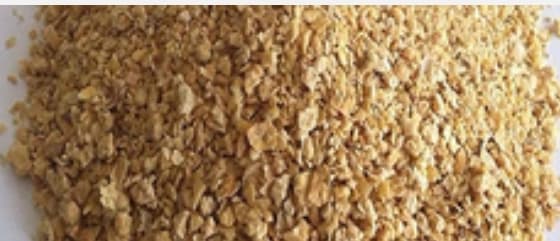
- Appearance / Color
- : Light brown powder or granules
- Odor
- : Characteristic
- Moisture Content (%)
- : <12%
- Synonyms & Trade Names
- : CSM; Cottonseed cake; Expeller cottonseed meal
- Total Plate Count (TPC)
- : <500,000 CFU/g
- Yeast & Mould
- : <50,000 CFU/g
- E. Coli
- : <100 CFU/g
- Coliform Bacteria
- : <1,000 CFU/g
- Salmonella
- : Negative/25g
- Shelf Life
- : 6 months
- Packaging Size
- : 50 kg / bulk
- Packaging Type
- : PP woven bag / bulk
- Storage Conditions
- : Cool, dry; away from moisture
- Halal Certification
- : Available on request
- Kosher Certification
- : Available on request
- ISO / HACCP
- : Yes
- Food Grade / Regulatory Status
- : Feed grade
- Crude Protein (%, min)
- : 36-41%
- Crude Fat / Ether Extract (%, max)
- : 1.0-4.0%
- Crude Fiber (%, max)
- : 12% max
- Ash Content — Feed (%, max)
- : 6.5% max
- Calcium Content, Ca (%)
- : 0.15%
- Phosphorus Content, P (%)
- : 0.9%
- Bulk Density
- : ~0.55 g/cm³
- Lysine Content (%, min)
- : 1.6%
- Antioxidant Treatment
- : None or as specified
- Species of Origin Declaration
- : Gossypium hirsutum (Cotton)
- Aflatoxin B1
- : <5 ppb
- Heavy Metals — Feed (As, Pb, Hg, Cd)
- : Compliant
- Dioxins & PCBs (pg WHO-TEQ/g fat)
- : Compliant
Categories
Share this product :
Brief Overview
Cottonseed meal is a by-product of oil extraction from cotton seeds, it is used for animal feeding due to its richness in oil and protein. Cottonseed meal also provides a distinctive blend of protein, fibre, and energy compared to other feed materials. Cottonseed meal is commonly used as a source of protein for adult ruminants, pigs, poultry, rabbits, horses, fish, and crustaceans.
Manufacturing Process
The common manufacturing process of cottonseed meal is to clean the seeds, remove fiber covering them, the hulls are cut and separated from the kernels. The kernels are then crushed, cooked, and the oil is extracted using a hydraulic press or a screw press (expeller). This extraction method uses heat, thereby increasing the protein binding, converting more free-gossypol(toxic form) to the bound form (non-toxic).