
Share this product :
Paraffin Wax
- Origin
- : Taiwan
- CAS Number
- : 8002-74-2
- HS Code
- : 2712.20.00
Basic Info
- IUPAC Name
- : paraffin wax (petroleum derived)
- Molecular Formula
- : CnH(2n+2) (n=20-40)
- Synonyms & Trade Names
- : Paraffin wax; Petroleum wax; Petrolatum wax
- Purity / Assay (%)
- : Technical grade
- Physical Form
- : Solid
- Concentration
- : Pure substance
- Appearance / Color
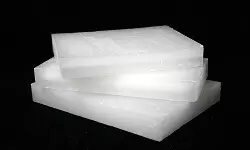
- : White to off-white solid
- Odor
- : Odorless
- Boiling Point (°C)
- : >300
- Density (g/cm³)
- : 0.9000
- Solubility in Water
- : Insoluble
- UN Number
- : Not applicable
- H-Statements
- : None
- P-Statements
- : P260
- REACH Status
- : Registered
- Drug Precursor Status
- : Non-precursor
- Storage Class (GHS)
- : 13
- Storage Conditions
- : Cool, dry place
Categories
Share this product :
Brief Overview
Paraffin wax is a soft, colorless or white, odorless solid derived from petroleum, coal, or shale oil. It consists primarily of saturated hydrocarbons (alkanes) with a typical melting point range of 46–68°C (115–154°F). Known for its hydrophobic and low-reactivity properties, paraffin wax is widely used across various industries.
In addition to its role in the polymer industry, paraffin wax is commonly used in candles, cosmetics, packaging, and coatings. Its applications extend to serving as a moisture barrier, lubricant, and thermal insulator. Due to its versatility and cost-effectiveness, paraffin wax remains a critical material in both industrial and consumer products.
Manufacturing Process
Paraffin wax is extracted from crude oil, from which paraffin-rich fractions are separated during the refining process. These fractions undergo vacuum distillation to isolate heavier hydrocarbons. The resulting slack wax, which contains oil and wax, is then subjected to solvent dewaxing using solvents like methyl ethyl ketone (MEK) to separate the wax from the oil. The crude wax is further refined through sweating (controlled heating to remove oil) and hydrotreatment or bleaching to improve color, odor, and purity. The final product is molded into blocks, granules, or liquid forms for various industrial applications.